Strong Story Structure 101: The Midpoint
Story structure is vital if we’re going to write strong novels that grab our readers’ attention and never lets it go. The midpoint of our stories often tests this structure.
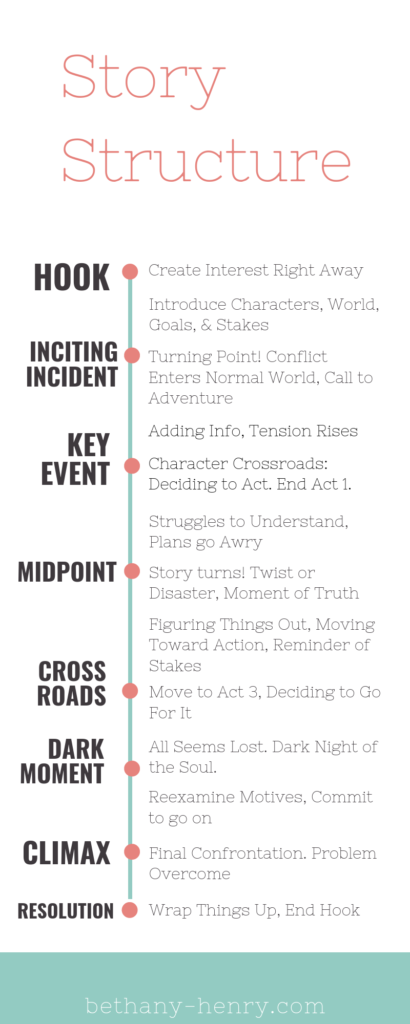
(Check out the earlier posts in the Story Structure series for a review of the hook, inciting incident, and key event.)
The Midpoint
Often called the “murky middle,” it is common to lose track of our plot and be thoroughly sick of our own story by this point.
However, if we have a strong story structure roadmap to follow it can be much easier to keep our stories moving and grooving through the midpoint in order to build toward our climax.
The middle of our story can be broken into three parts: pre-midpoint, the midpoint, and post-midpoint.
Or call them whatever you want, I’m just trying to break it down a bit! This can be helpful so we don’t get too bogged down looking at act 2 as a whole and it can keep our story moving dynamic wise.
The 3 Parts of Act 2
Part 1: Pre-midpoint, AKA Fun and Games
As we enter Act 2, our protagonist has just made some sort of decision and transition into a new world or reality of life.
Now they can discover what their new way of life looks like, learn new things, attempt to solve their problems. Often they can be in a new world or circumstances which can lead to interesting new situations. This may look like training/classes, gaining skills, building something, working toward their original goal, etc.
These fun and games should lead the protagonist to gain momentum and lead into the action of the midpoint of the story.
Part 2: The Midpoint, AKA Midpoint Shift
This generally occurs right around the middle of the story, hence its name. It should be either a high or a low point for our hero, where the fun and games either succeed (a false success) or everything falls apart.
Obviously this isn’t the end of the story… but the characters don’t know that. They are working toward a goal and they want to achieve it. This should be a dramatic point whether for good or bad.
The shift part of the midpoint refers to how this high or low often should change how our protagonist approaches the rest of the story. This may be in the form of learning new information that changes how they see their quest or in how they see themselves.
Part 3: Post-midpoint, AKA Stakes Rise
We’re past the fun and games- now things are serious.
Whether the hero succeeded or failed in the midpoint, now the stakes need to rise higher than ever before. The hero is finally figuring out what they are really up against. There needs to be reminders that time is running out, that the possibility of failure is high, that the consequences are terrible. This is when the villain’s true plans can be revealed, when we learn things are worse than we thought.
Basically this is where we as writers get really mean. Things have to get bad before they can get good again.

It feels awkward leaving this post while everything in our story is going terribly for our hero, but that’s how the middle part of the story goes! Things haven’t been completed yet.
We must trust the process- all of this is setting us up for transitioning into the final act of our story.
Originally published November 15, 2019 on Bethany-Henry. com.


